Palestinian children attend lessons inside a temporary classroom made from donated caravans in Gaza City, Palestine, February 3, 2026. Majdi Fathi/NurPhoto via Getty Images
GAZA CITY (Epicstorian News) — Inside a modest row of white portable cabins on the outskirts of Gaza City, the sound of lessons has slowly returned.
Dozens of Palestinian children sit at small desks, notebooks open, as teachers try to restore a sense of normal life through education.
These makeshift structures — known locally as caravan schools — have become the backbone of emergency learning across the Gaza Strip.
After more than two years of war, displacement, and infrastructure destruction, Gaza’s formal education system remains in ruins. The United Nations Children’s Fund (UNICEF) reports that approximately 97 percent of school buildings in Gaza have been damaged or destroyed since the escalation of hostilities in October 2023. Hundreds of thousands of children have been left without consistent access to classrooms.
To address the crisis, humanitarian agencies and local education authorities have introduced Temporary Learning Spaces (TLS), many of them built from caravans, prefabricated units, tents, or repurposed community halls. These sites now function as substitute schools for tens of thousands of students.
According to the UN Office for the Coordination of Humanitarian Affairs (OCHA), by mid-2025 around 276 temporary learning spaces were operating across Gaza, serving nearly 12,000 students with the help of more than 2,600 teachers and educational staff.
The initiative was designed to provide basic instruction in mathematics, Arabic language, science, and social studies while long-term reconstruction plans remain uncertain.
UNRWA, the UN agency responsible for Palestinian refugees, has also launched large-scale efforts to reopen education services. In early 2025, the agency announced that it had established 130 temporary schools enabling approximately 47,000 children to return to in-person learning.
Distance education programs were simultaneously expanded to reach additional students unable to attend physically.
In Gaza City, many of these temporary schools operate out of converted caravans placed in schoolyards, parking lots, and open fields. Each classroom typically hosts 20 to 30 pupils. Resources are scarce — textbooks are limited, electricity is unreliable, and air conditioning is rare — but teachers say the priority is simply getting children back into structured learning.
“We lost so much time,” said a local teacher who asked not to be named. “Even if the classroom is small and hot, the children need education. They need routine. Without school, they lose hope.”
For students, the return to class has been both emotional and challenging. Many children in Gaza have experienced trauma, displacement, and loss. Education experts emphasize that reopening schools is not only about academics but also about psychological recovery.
“School gives me something to look forward to,” said 11-year-old Mariam, a student attending a caravan classroom in central Gaza City. “At home I was always scared. Here I can see my friends again.”
Psychosocial support has become a key component of the TLS program. International and local organizations have integrated counseling, recreational activities, and group discussions into daily lessons to help children cope with the stress of conflict.
However, the system faces severe limitations. Many temporary classrooms lack proper sanitation facilities, clean water access, or safe playgrounds. Some operate in double shifts to accommodate the overwhelming number of displaced students. Teachers often work without salaries or with irregular pay.
OCHA has repeatedly warned that education in Gaza is at risk of a “lost generation” if sustained funding and reconstruction do not occur. The agency states that rebuilding the education sector will require billions of dollars and years of coordinated effort.
Parents in Gaza City say the caravan schools, while imperfect, are better than nothing. “My son had not opened a book in months,” said Ahmad, a father of two. “Now he wakes up early and feels like a child again.”
Local education officials describe the temporary schools as a bridge solution. Permanent reconstruction of Gaza’s education infrastructure has barely begun due to security concerns, shortages of building materials, and political uncertainty.
International donors have pledged support, but aid agencies insist that much more is needed. UNICEF has called for a comprehensive plan to rehabilitate damaged schools, provide learning materials, train teachers, and ensure safe routes for students.
Despite the hardships, attendance in many TLS sites has exceeded expectations. Teachers report that classrooms are full and that children show strong motivation to continue their studies.
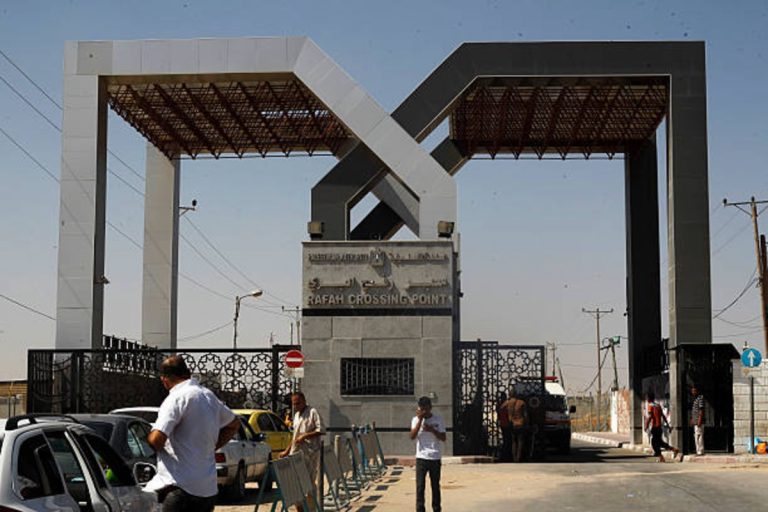
Related: Israel to Allow Limited Pedestrian Passage Through Rafah Crossing
“The caravan is not a real school,” admitted another educator in Gaza City, “but inside it, real learning happens.”
According to Ahmad, until permanent schools are rebuilt, the caravans will continue to serve as places of learning, hope, and quiet determination amid one of the world’s most difficult humanitarian crises.