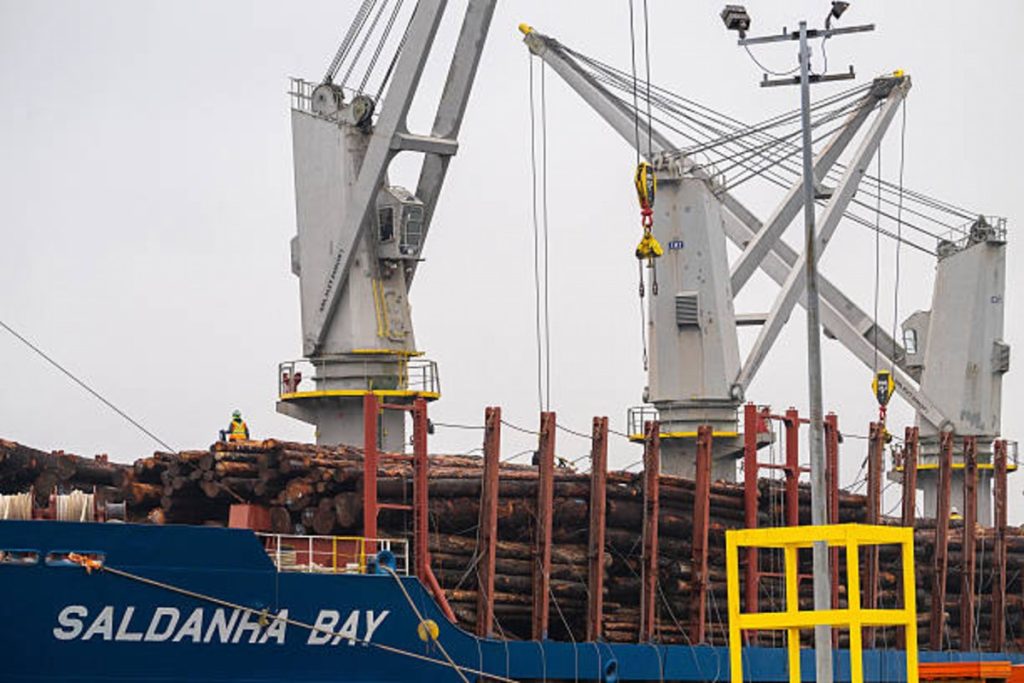
A lumber carrier loaded with timber in Nanaimo, British Columbia, on Jan. 22, 2026. Canada and China unveiled cooperation agreements emphasizing timber’s environmental benefits in construction. James MacDonald/Bloomberg via Getty Images
BEIJING, CHINA, JANUARY 22, 2026 / EPICSTORIAN NEWS — Canada and China have signed multiple cooperation agreements during Canadian Prime Minister Mark Carney’s visit to Beijing amid ongoing trade tensions and efforts to strengthen bilateral economic dialogue.
The accords were formalized in memorandums of understanding and joint statements aimed at addressing long-standing trade disputes, expanding institutional mechanisms for economic and trade dialogue, and fostering collaboration across energy, forestry, and cultural sectors.
Economic and Trade Roadmap Agreed
According to China’s Ministry of Commerce, China and Canada concluded multiple rounds of consultations at various levels to reach agreements addressing key economic and trade issues of mutual concern.
As outlined by the ministry, the cooperation roadmap includes expanding the mandate of the China-Canada Joint Economic and Trade Commission and broadening pragmatic economic and trade cooperation across all fields.
The roadmap encompasses cooperation under multilateral and regional frameworks, institutional dialogue enhancements, and agreements on direct flights and agricultural product inspection and quarantine measures.
China underscored its willingness to work with Canada to create a stable, fair, and non-discriminatory environment to boost trade and investment, particularly in the electric vehicle sector.
In reporting on the institutional aspects of the agreement, one official noted that the enhanced commission mechanism would serve as a stronger foundation for managing the bilateral trade relationship, resolving disputes, and promoting dialogue on issues including intellectual property and trade remedies.
Specific Memorandums Signed in Beijing
A joint statement released by the Chinese Embassy in Ottawa listed several memorandums of understanding and cooperation documents signed during the leaders’ meeting.
These included agreements on public security cooperation, modern wood construction, cultural exchanges, food safety, pet food export protocols, and energy cooperation between respective government agencies.
Among the signed documents were:
- A memorandum on cooperation between China’s Ministry of Public Security and the Royal Canadian Mounted Police related to combating crime.
- A memorandum between China’s Ministry of Housing and Urban–Rural Development and Canada’s Department of Natural Resources and British Columbia’s Ministry of Forests on cooperation in modern wood construction.
- An economic and trade cooperation roadmap to guide future collaboration.
- Agreements on food safety, agricultural inspection, and pet food export protocols.
- A memorandum between the China National Energy Administration and Canada’s Department of Natural Resources on strengthening energy cooperation.
- A letter of intent on media and tourism cooperation between China Media Group and Destination Canada.
These documents reflect a wide range of engagement, from security cooperation and infrastructure development to cultural and energy partnerships.
Tariff Adjustments and Trade Dispute Resolutions
The agreements also address tariff disputes that had previously impeded bilateral trade. Canada had maintained high tariff rates on imported Chinese electric vehicles and other products, and China imposed retaliatory tariffs on Canadian canola seed, seafood, peas, and pork products. In recent negotiations, the two countries agreed to modify these measures as part of the cooperation framework.
Under the arrangements announced, Canada will allow up to 49,000 imported Chinese electric vehicles to enter the Canadian market under a most-favoured-nation tariff rate of 6.1%, replacing a longstanding 100% surtax that had been in place as part of trade actions initiated in 2024. Canada is also expected to adjust tariffs on steel and aluminum products in coordination with China.
In exchange, China signaled its intent to lower tariffs on Canadian canola seed to 15% by March 1, 2026, from roughly 84% previously, and to remove certain anti-discrimination tariffs on other Canadian products including canola meal, lobster, crab, and peas through at least the end of the year.
Trade data from industry groups showed significant declines in Canadian seafood exports to China following tariff imposition, with crab exports dropping sharply from 2024 to 2025. These adjustments are poised to restore market access for key agricultural exports.
Institutional Cooperation and Joint Mechanisms
In addition to sector-specific agreements, Canada and China agreed to enhance formal mechanisms for ongoing economic dialogue. Strengthening the joint economic and trade commission is intended to provide a structured platform for future cooperation across economic, technological, and regulatory areas.
Officials emphasized the institutional nature of these arrangements, covering traditional sectors such as energy and agriculture, as well as emerging fields like clean technology, sustainable trade, and e-commerce. The economic roadmap detailed 28 initiatives, including facilitation of personnel exchanges, trade promotion, and investment cooperation.
Diplomatic Engagement and Implementation
In Ottawa, China’s ambassador to Canada emphasized the importance of timely implementation of the agreements reached in Beijing, urging both sides to translate commitments into measurable outcomes.
Government departments in both countries will maintain frequent contact to advance priority areas of collaboration.
Carney has indicated plans to return to China later in the year for a meeting connected to the Asia-Pacific Economic Cooperation (APEC) forum, providing both governments additional time to work on the agreed initiatives.
Sectoral Priorities Identified
In energy and trade discussions, both Canada and China acknowledged the importance of cooperation in clean technology and energy sectors. Agreements signed included measures for energy cooperation between respective governmental authorities.
Canada’s export sectors, including forestry and agriculture, were a focus of tariff and inspection protocol agreements aimed at resolving trade barriers and facilitating improved market access.
The memorandum concerning modern wood construction reflects technical collaboration between Canadian regional authorities and Chinese counterparts.
Trade Data and Export Impacts
Trade statistics indicate that prior to tariff adjustments, Canadian exports of certain goods to China contracted significantly due to tariff barriers.
Related: Venezuelan opposition leader Machado to meet Trump at White House Thursday
Exports of frozen or prepared crab dropped by more than 50% from 2024 to 2025, while fresh seafood exports also declined markedly.
Tariff reductions and quota arrangements are expected to reinstate Canadian access to crucial markets, though official post-agreement trade data remain pending.