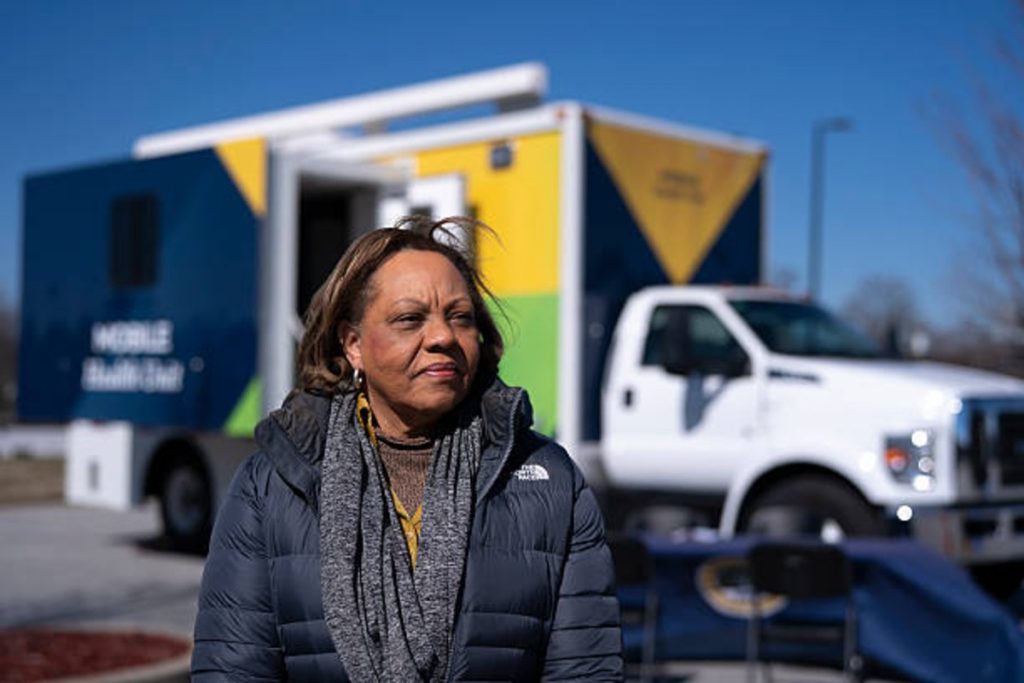
South Carolina State Rep. Rosalyn Henderson-Myers (D-Spartanburg) at a mobile clinic providing free MMR vaccinations amid the largest measles outbreak in decades. Sean Rayford/Getty Images
SPARTANBURG, SOUTH CAROLINA (Epicstorian News) — Health authorities ramp up vaccinations and containment as confirmed measles cases surge past 920.
Unprecedented Spread and Public Health Response
According to the latest state data, the outbreak began in October 2025 and in just months has eclipsed other recent U.S. outbreak, including last year’s in Texas that recorded 762 cases, making the current South Carolina outbreak the largest in the nation since measles was declared eliminated in 2000.
The Centers for Disease Control and Prevention (CDC) data shows that, nationwide, the United States has seen a sharp rise in measles cases, with hundreds of confirmed infections in multiple states in 2026 alone.
State leadership has also joined public health efforts.
South Carolina State Rep. Rosalyn Henderson-Myers (D-Spartanburg) was present outside a mobile clinic on February 6, 2026, advocating for vaccinations and raising awareness of the outbreak.
The clinic offered free MMR vaccinations as the South Carolina Department of Health reported 876 confirmed cases earlier in the week, most concentrated in Spartanburg County.
State medical officials have implemented extensive containment measures, including quarantining exposed individuals, currently numbering in the hundreds, and isolating active cases. As of the latest update, there are 277 people in quarantine and eight confirmed cases classified as actively isolating.
A Closer Look at Vaccination and Cases
Vaccination status among those infected reflects the outbreak’s concentration in under‑immunized populations. Of the 920 reported infections:
- 840 are unvaccinated
- 20 partially vaccinated (one MMR dose)
- 24 fully vaccinated
- 36 have unknown vaccination status
These figures demonstrate the disproportionate impact measles has in communities with low vaccine uptake.
In an outbreak setting, public health guidelines recommend offering the measles‑mumps‑rubella (MMR) vaccine to infants as young as 6 months to provide early protection for the most vulnerable groups — measures now being implemented in parts of South Carolina.
Complications and Risks of Measles
Measles is renowned for its high transmissibility; it spreads through respiratory droplets and can linger in the air for hours after an infected person leaves a space. The virus is contagious from about four days before to four days after the classic rash appears.
Although most cases result in self‑limited illness with fever and rash, measles can cause severe complications including pneumonia, encephalitis (brain swelling), and, in rare cases, death.
Children under age 5, pregnant individuals, and people with compromised immune systems are at highest risk for serious outcomes.
Nationa Elimination Status
The spread of measles in South Carolina is part of a broader resurgence of the virus across the United States and the Americas. CDC records show that as of early February 2026, hundreds of measles cases have been confirmed nationwide across multiple jurisdictions, including outbreaks in Arizona, California, Florida, Georgia, Minnesota and more.
Experts warn that continued transmission and repeated outbreaks in under‑vaccinated regions could jeopardize the U.S.’s official measles elimination status, first achieved in 2000 when endemic transmission was halted through widespread vaccination.
Communication and Containment Strategies
State and local health departments are boosting public messaging about the safety and importance of vaccination. Mobile vaccination units have been deployed to communities with low immunization rates, offering no‑cost MMR vaccine clinics to encourage uptake.
In January 2026, South Carolina reported a significant increase in measles vaccinations — more than 16,800 doses administered statewide, a 72% increase compared with the same period in 2025. Spartanburg County saw an even steeper rise, with a 162% increase in doses given.
Public health officials emphasize that vaccines remain the most effective defense against measles and that increasing vaccine coverage is key to halting this outbreak and preventing future resurgences.
Related: Global Chronic Diseases Surge, Driving Healthcare Costs Higher, WHO Says